
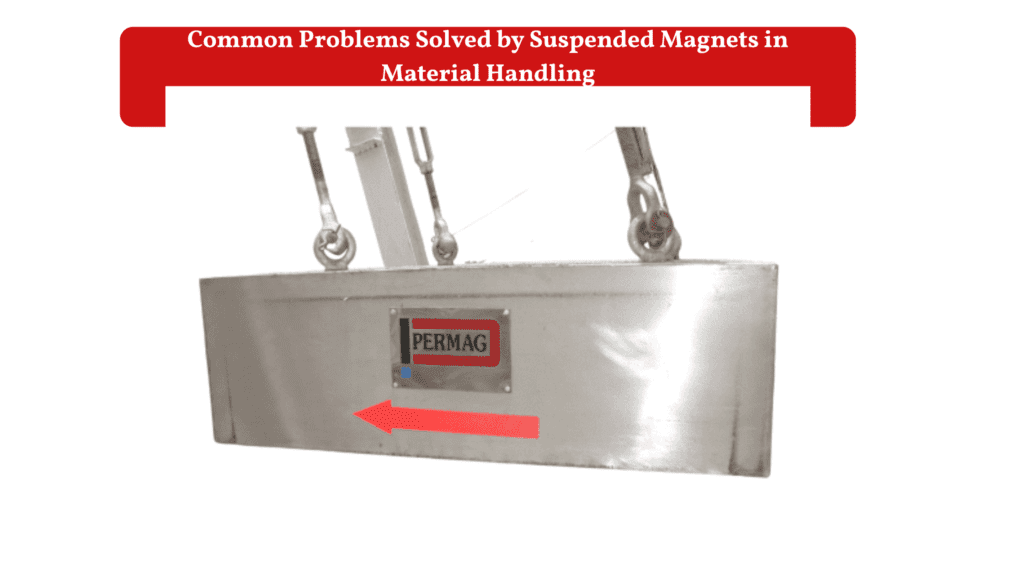
Material handling is an important part of many industries, such as mining, cement, recycling, power plants, steel, food processing, and manufacturing. These industries move large volumes of raw materials using conveyor belts and other handling systems every day. During this process, unwanted iron and metal pieces often mix with the material. These metal contaminants can create serious problems if not removed in time.
This is where suspended magnets play a very important role. A suspended magnet is installed above a conveyor belt and is designed to remove unwanted ferrous materials like iron pieces, nails, bolts, scrap metal, and steel particles from the material flow.
Understanding Suspended Magnets in Material Handling
Before we move to the problems, let us quickly understand what a suspended magnet is.
A suspended magnet is a magnetic separator that is suspended over a conveyor belt. As material passes below it, the magnet attracts and lifts ferrous metal particles from the moving material. These metal pieces are then either manually removed or automatically discharged using a self-cleaning system.
Suspended magnets can be:
- Permanent suspended magnets
- Electromagnetic suspended magnets
- Self-cleaning suspended magnets
They are widely used because they work continuously without disturbing the material flow.
Metal Contamination in Raw Materials
The Problem
One of the most common problems in material handling is metal contamination. Raw materials such as coal, limestone, sand, grains, waste, or minerals often contain unwanted iron pieces. These metal contaminants may come from:
- Mining tools
- Broken machinery parts
- Transportation equipment
- Scrap mixed during storage
If these metal pieces go unnoticed, they can cause serious issues later in the process.
How Suspended Magnets Solve This
Suspended magnets continuously remove ferrous metals from the material as it moves on the conveyor belt. They catch metal particles before they reach crushers, mills, or processing machines. This ensures that only clean material moves forward.
By removing metal contamination early, suspended magnets improve product quality and reduce processing problems.
Damage to Crushers, Mills, and Equipment
The Problem
Metal pieces entering crushers, grinders, and mills can cause:
- Broken blades
- Damaged crusher jaws
- Bent shafts
- Costly repairs
Even a small iron piece can lead to major equipment failure. Repairing such damage is expensive and time-consuming.
How Suspended Magnets Solve This
Suspended magnets act as a protective shield for downstream equipment. They remove iron and steel particles before the material reaches sensitive machinery.
This protection:
- Increases equipment life
- Reduces repair costs
- Prevents sudden machine breakdowns
Industries using suspended magnets see fewer equipment failures and smoother operations.
Unexpected Downtime and Production Loss
The Problem
Unexpected downtime is a major concern in material handling industries. Equipment damage caused by metal contamination can stop the entire production line. This leads to:
- Loss of production
- Missed delivery deadlines
- Increased operational costs
Downtime also affects workforce productivity and plant efficiency.
How Suspended Magnets Solve This
By removing metal contaminants in advance, suspended magnets help prevent equipment breakdowns. This leads to:
- Continuous production
- Fewer stoppages
- Better plant efficiency
Self-cleaning suspended magnets are especially useful as they work automatically and do not require frequent manual cleaning.
Safety Risks for Workers
The Problem
Loose metal pieces on conveyor belts or inside machines create safety risks for workers. These risks include:
- Flying metal fragments
- Machine jams are causing sudden movements
- Injuries during the manual removal of metal scrap
Worker safety is a top priority in any industrial environment.
How Suspended Magnets Solve This
Suspended magnets reduce the need for manual metal removal. They automatically extract metal pieces from the material flow, keeping the conveyor belt area safer.
This:
- Reduces workplace accidents
- Improves overall safety standards
- Creates a cleaner working environment
A safer plant also helps companies comply with safety regulations.
Reduced Product Quality
The Problem
In many industries, product quality is critical. Metal contamination can reduce the quality of the final product. For example:
- Cement quality can suffer due to iron contamination
- Recycled material may not meet purity standards
- Food and grain industries risk contamination issues
Poor product quality can result in rejected batches and customer complaints.
How Suspended Magnets Solve This
Suspended magnets ensure that unwanted ferrous materials are removed before processing. This leads to:
- Cleaner raw materials
- Consistent product quality
- Higher customer satisfaction
Many industries rely on suspended magnets to maintain high-quality standards.
High Maintenance Costs
The Problem
Frequent equipment damage and cleaning result in high maintenance costs. Without proper metal separation, plants spend more on:
- Spare parts
- Repair labor
- Emergency maintenance
Over time, these costs add up and affect profitability.
How Suspended Magnets Solve This
By preventing metal-related damage, suspended magnets reduce the need for frequent maintenance. Equipment stays in better condition for longer periods.
This results in:
- Lower maintenance expenses
- Better budget control
- Improved return on investment
Installing a suspended magnet is a cost-effective long-term solution.
Inefficient Recycling Processes
The Problem
In recycling plants, separating ferrous metal from waste material is a major challenge. Manual sorting is slow and inefficient. Poor separation reduces the value of recycled materials.
How Suspended Magnets Solve This
Suspended magnets play a key role in recycling operations. They automatically separate iron and steel from waste streams such as:
- Construction waste
- Municipal solid waste
- Plastic and rubber materials
This improves recycling efficiency and increases the value of recovered metals.
Conveyor Belt Damage
The Problem
Metal pieces trapped between the material and the conveyor belt can damage the belt surface. This leads to:
- Belt tears
- Reduced belt life
- Frequent belt replacements
Replacing conveyor belts is expensive and causes downtime.
How Suspended Magnets Solve This
Suspended magnets remove sharp metal objects before they reach the belt’s pressure points. This protects the conveyor belt and extends its lifespan.
Healthy conveyor belts mean smoother material handling and lower replacement costs.
Compliance and Industry Standards
The Problem
Many industries must follow strict quality and safety standards. Metal contamination can lead to non-compliance, penalties, or loss of certifications.
How Suspended Magnets Solve This
Using suspended magnets helps industries meet regulatory and quality requirements. Clean material flow supports compliance with:
- Safety standards
- Quality control norms
- Environmental guidelines
This builds trust with clients and regulatory authorities.
Manual Sorting and Labor Dependency
The Problem
Without suspended magnets, companies often depend on manual labor to remove metal contaminants. This process is:
- Slow
- Inaccurate
- Labor-intensive
Manual sorting also increases operational costs.
How Suspended Magnets Solve This
Suspended magnets automate the metal separation process. They work continuously without human intervention.
This:
- Reduces labor dependency
- Improves accuracy
- Speeds up material handling
Automation leads to better productivity and lower operational stress.
Conclusion
Suspended magnets are an essential solution for many material handling problems. From removing metal contamination and protecting equipment to improving safety and product quality, they play a vital role in industrial operations.
By installing the right suspended magnet system, industries can:
- Reduce downtime
- Lower maintenance costs
- Improve efficiency
- Enhance safety
- Maintain high product quality
Whether it is mining, cement, recycling, power plants, or manufacturing, suspended magnets offer a reliable and cost-effective way to handle common material handling challenges.
If your plant handles bulk materials and uses conveyor belts, investing in a suspended magnet is not just a choice; it is a smart industrial decision.