
In Indian industries like food processing, pharmaceuticals, and bulk material handling, removing metal contamination is critical for both safety and quality. Two widely used solutions are grate magnets and plate magnets.
If you’re evaluating Permag products or planning to upgrade your magnetic separation system, this guide will help you understand which option fits your needs best.
What Are Grate Magnets?
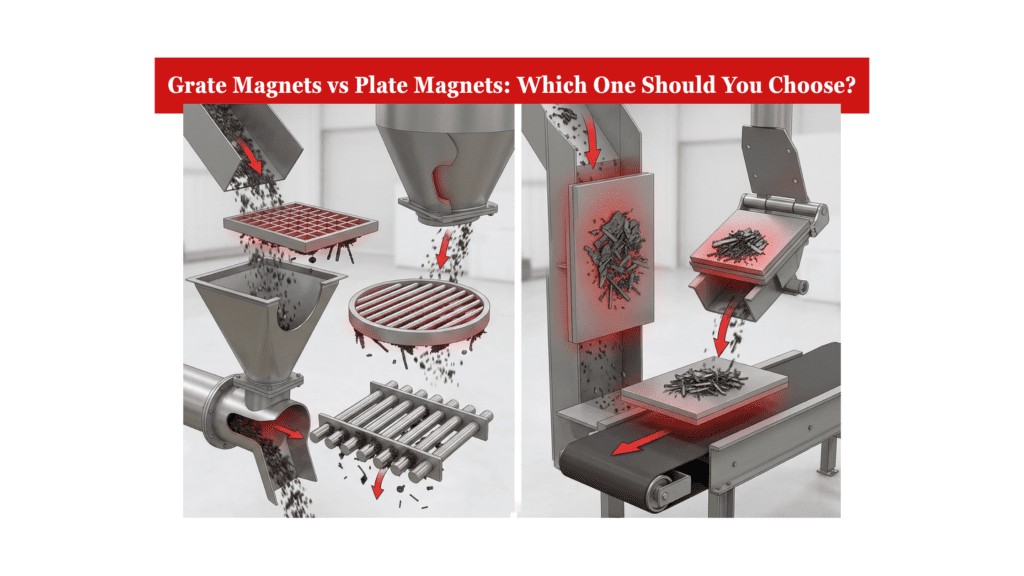
Grate magnets are designed for fine, free-flowing materials such as powders, grains, and granules. They are typically installed inside hoppers, bins, or chutes.
How They Work
Material passes through a grid of magnetic rods, ensuring maximum contact and efficient removal of even tiny ferrous particles.
Common Applications in India:
- Flour mills and spice processing
- Pharmaceutical manufacturing
- Chemical industries
- Dairy and food production
Key Benefits:
- High-intensity magnetic field
- Excellent for fine contamination
- Improves product purity
What Are Plate Magnets?
A plate magnet is a flat magnetic unit mounted over conveyors or inside chutes to capture metal contaminants from bulk materials.
Many Indian industries rely on plate magnet systems, especially when handling large volumes of raw materials.
How They Work
Material flows over or near the plate, and ferrous particles are attracted to the magnet’s surface.
Common Applications:
- Cement plants
- Mining and aggregates
- Recycling units
- Packaging lines
Key Benefits:
- Simple installation
- Low maintenance
- Effective for larger metal pieces
Grate Magnets vs Plate Magnets: Key Differences
1. Material Flow
- Grate magnets: Best for vertical, gravity-fed systems
- Plate magnets: Ideal for horizontal or conveyor-based flow
2. Contamination Type
- Grate magnets: Capture fine and weakly magnetic particles
- Plate magnets: Remove larger and heavier contaminants
3. Efficiency Level
- Grate magnets: High efficiency due to direct contact
- Plate magnets: Moderate efficiency but faster processing
4. Maintenance
- Grate magnets: Require manual cleaning
- Plate magnets: Easier and quicker to clean
Why Choose Permag Products?
When it comes to magnetic separation in India, Permag products are known for reliability and performance.
What Sets Permag Apart:
- Strong and consistent magnetic strength
- Durable stainless steel construction
- Custom solutions for different industries
- Compliance with industrial safety standards
Practical Insight: Many Indian manufacturers prefer combining Permag grate magnets with plate magnets for multi-stage contamination removal.
When Should You Choose Grate Magnets?
Go for grate magnets if:
- You process powders like flour, spices, or chemicals
- Product purity is a top priority
- You need to capture very fine metal particles
- Your system uses gravity flow
When Should You Choose Plate Magnets?
Choose a plate magnet in India if:
- You handle bulk materials on conveyor belts
- You want low-maintenance equipment
- Contaminants are larger and easier to detect
- Your production line has high throughput
Best Practice: Use Both for Maximum Efficiency
In many Indian manufacturing setups, using both magnets together delivers the best results.
Example:
- Plate magnet removes large metal pieces early
- Grate magnets capture fine particles later
This layered approach ensures better product quality and protects machinery from damage.
Factors to Consider Before Buying
Before selecting between grate magnets and plate magnets, consider:
- Type of material (powder vs bulk)
- Flow direction (vertical or horizontal)
- Required purity level
- Cleaning frequency
- Industry compliance standards
Common Mistakes to Avoid
- Selecting magnets without analyzing material flow
- Ignoring magnetic strength specifications
- Choosing cheaper options over quality
- Not considering a multi-stage separation system
Final Thoughts
Both grate magnets and plate magnets play essential roles in industrial separation systems.
- Choose grate magnets for precision and fine particle removal
- Choose plate magnets for handling bulk materials efficiently
If you’re investing in Permag products, combining both types can significantly improve performance, reduce contamination risks, and enhance overall productivity.
FAQs
1. Which is better: grate magnets or plate magnets?
It depends on your application. Grate magnets are better for fine materials, while plate magnets work well for bulk handling.
2. Are Permag products reliable for Indian industries?
Yes, Permag products are widely trusted for their durability, strong magnetic performance, and industry-specific solutions.
3. Can I use both grate and plate magnets together?
Yes, combining both provides better contamination control and improved efficiency.
4. Which magnet requires less maintenance?
Plate magnets generally require less maintenance compared to grate magnets.
5. Are grate magnets suitable for food processing?
Yes, they are ideal for ensuring high purity in food and pharmaceutical applications.