
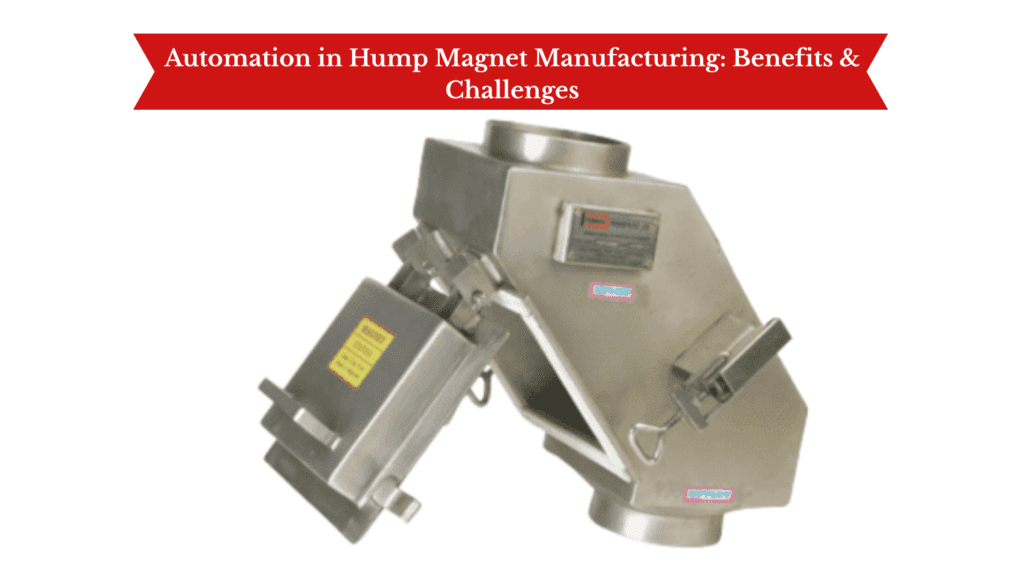
In today’s fast-changing manufacturing industry, automation is no longer a luxury, it is a necessity. Hump magnet manufacturing is also moving towards automation to meet growing demand, improve quality, and reduce production time. From raw material handling to final quality checks, automated systems are slowly transforming how hump magnets are made.
This blog explains what automation means in hump magnet manufacturing, its key benefits, and the challenges manufacturers face, in clear and simple language.
What Is Automation in Hump Magnet Manufacturing?
Automation means using machines, sensors, and computer-controlled systems to perform manufacturing tasks with minimal human effort. Instead of depending fully on manual labor, automated machines handle repetitive, heavy, and precision-based work.
In hump magnet manufacturing, automation can be used in:
- Rubber mixing and molding
- Cutting and shaping of modules
- Fixing reflective elements
- Drilling and finishing
- Load testing and quality inspection
- Packaging and dispatch
Automation does not remove humans completely. Skilled workers still play an important role in monitoring, controlling, and maintaining machines.
Why Automation Is Becoming Important in Hump Magnet Manufacturing
The demand for hump magnets is increasing due to:
- Rapid urban development
- Growth of gated communities and commercial spaces
- Government focus on road safety
- Need for durable and standardized traffic solutions
To meet this demand consistently, manufacturers are adopting automation to increase production capacity without compromising quality.
Benefits of Automation in Hump Magnet Manufacturing
1. Consistent Product Quality
One of the biggest advantages of automation is uniform quality. Machines follow fixed parameters, which means:
- Same size and shape for every hump magnet
- Equal weight distribution
- Accurate placement of reflectors
This consistency is very important for large projects and government tenders where quality standards must be maintained.
2. Higher Production Efficiency
Automated machines can work faster than manual processes. This helps manufacturers:
- Produce more hump magnets in less time
- Meet bulk order deadlines
- Handle large infrastructure projects easily
Automation reduces delays and ensures smooth production flow.
3. Improved Load-Bearing Accuracy
Hump magnets must withstand heavy vehicle loads. Automated molding and testing machines help ensure:
- Proper rubber density
- Correct compression strength
- Reliable load-bearing capacity
This results in safer and longer-lasting products.
4. Reduced Human Error
Manual production can lead to mistakes due to fatigue or inconsistency. Automation minimizes:
- Measurement errors
- Improper mixing of materials
- Uneven finishing
Fewer errors mean less wastage and fewer rejected products.
5. Better Workplace Safety
Hump magnet manufacturing involves heavy materials and machinery. Automation helps reduce:
- Manual lifting of heavy rubber compounds
- Risk of injuries during cutting and molding
- Exposure to high-temperature processes
This creates a safer working environment for employees.
6. Cost Savings in the Long Run
Although automation requires initial investment, it reduces:
- Labor costs
- Material wastage
- Rework and repair expenses
Over time, automated manufacturing becomes more cost-effective and profitable.
7. Scalability for Business Growth
Automation allows manufacturers to:
- Increase production quickly when demand rises
- Maintain quality even at high volumes
- Expand into new markets confidently
This makes automation ideal for manufacturers planning long-term growth.
Challenges of Automation in Hump Magnet Manufacturing
Despite its benefits, automation also comes with certain challenges that manufacturers must consider.
1. High Initial Investment
Setting up automated machinery requires:
- Expensive equipment
- Installation costs
- Software and control systems
Small or new manufacturers may find this investment difficult initially.
2. Skilled Workforce Requirement
Automation needs trained professionals to:
- Operate machines
- Handle technical issues
- Perform regular maintenance
Finding and training skilled operators can be time-consuming and costly.
3. Maintenance and Downtime
Automated systems require:
- Regular servicing
- Spare parts availability
- Technical support
If a machine breaks down, production may stop completely until repairs are done.
4. Limited Flexibility in Custom Orders
Automation works best for standardized products. For highly customized hump magnets:
- Manual adjustments may still be needed
- Production changes can take time
Manufacturers must balance automation with flexibility for custom requirements.
5. Dependence on Technology
Power failures, software errors, or sensor malfunctions can disrupt production. This makes manufacturers dependent on:
- Stable power supply
- Reliable technical systems
- Backup plans
How Manufacturers Can Overcome These Challenges
Successful manufacturers handle automation challenges by:
- Starting with partial automation instead of full automation
- Investing in employee training programs
- Keeping manual backup systems for critical operations
- Choosing reliable machinery suppliers
- Performing preventive maintenance regularly
A balanced approach helps manufacturers enjoy automation benefits without major risks.
Future of Automation in Hump Magnet Manufacturing
The future of hump magnet manufacturing lies in smart and semi-automated systems. With advancements in:
- AI-based quality inspection
- IoT-enabled machines
- Energy-efficient manufacturing
Automation will become more affordable and efficient. Manufacturers who adopt automation early will have a strong competitive advantage.
Conclusion
Automation is transforming hump magnet manufacturing by improving quality, safety, and efficiency. While challenges like cost and skill requirements exist, the long-term benefits far outweigh the difficulties.
For manufacturers aiming to deliver durable, reliable, and high-quality hump magnets, automation is not just an option, it is the future. By adopting the right level of automation, manufacturers can meet market demands, comply with standards, and grow their business sustainably.