
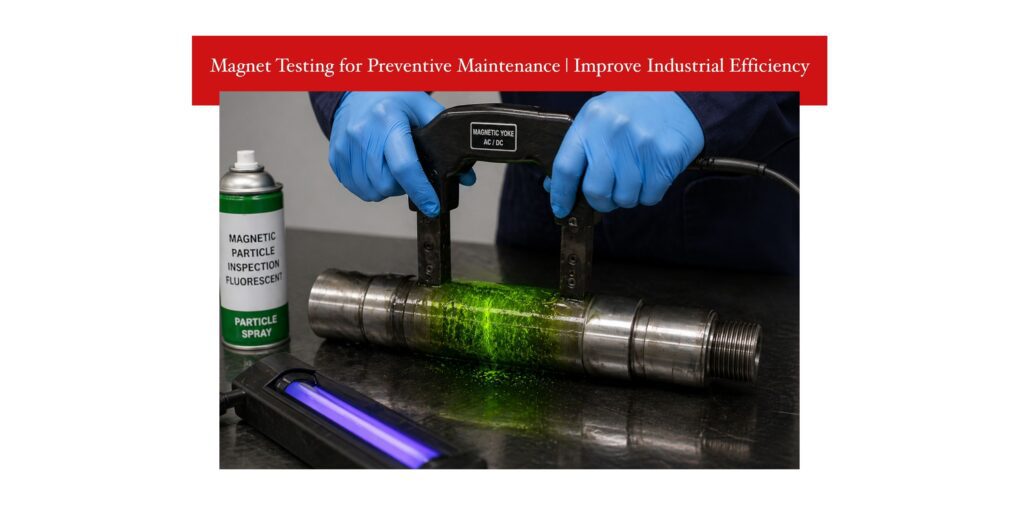
How Regular Magnet Testing Improves Preventive Maintenance in Industries
In modern industrial operations, preventive maintenance is no longer optional—it is essential for ensuring efficiency, safety, and long-term profitability. One often overlooked yet critical aspect of preventive maintenance is magnet testing.
Industries such as food processing, pharmaceuticals, chemicals, plastics, and mining rely heavily on magnetic systems to remove ferrous contaminants and protect machinery. However, without regular testing, these magnetic systems can lose efficiency over time, leading to serious operational risks.
This is why implementing routine magnet testing as part of a preventive maintenance strategy is crucial for maintaining performance and avoiding costly disruptions.
Understanding Preventive Maintenance in Industrial Operations
Preventive maintenance refers to scheduled inspections and servicing of equipment to prevent unexpected failures. Instead of reacting to breakdowns, industries adopt proactive strategies to ensure smooth operations.
Regular maintenance helps:
- Reduce downtime
- Improve equipment reliability
- Extend machinery lifespan
- Maintain consistent product quality
Without preventive maintenance, even small issues can escalate into major failures, resulting in production delays and financial losses.
What is Magnet Testing and Why It Matters?
Magnet testing is the process of evaluating the strength, performance, and reliability of magnetic equipment used in industrial systems. It involves checking parameters such as magnetic field strength, temperature stability, and overall efficiency.
According to Permag magnet testing services, regular testing helps identify performance shifts caused by wear, operating conditions, or damage.
Key Objectives of Magnet Testing
- Detect loss of magnetic strength
- Ensure effective removal of metal contaminants
- Maintain compliance with safety standards
- Prevent equipment malfunction
Magnets may appear durable, but their performance can degrade over time due to heat, corrosion, and mechanical stress.
The Role of Magnet Testing in Preventive Maintenance
Integrating magnet testing into preventive maintenance brings multiple operational advantages.
1. Early Detection of Performance Issues
Magnets can lose strength gradually, making it difficult to detect problems without proper testing. Regular testing helps identify issues early before they impact production.
Even minor variations in magnetic performance can lead to reduced efficiency or failure in capturing contaminants.
2. Preventing Equipment Damage
Industrial machinery such as crushers, mixers, and conveyors can be severely damaged by metal contaminants. Properly functioning magnets act as a protective barrier.
When magnets are not tested regularly:
- Contaminants pass through
- Equipment components wear out faster
- Maintenance costs increase
Regular testing ensures magnets continue to protect machinery effectively.
3. Ensuring Consistent Product Quality
In industries like food and pharmaceuticals, product quality is directly linked to safety.
Strong and well-maintained magnets:
- Remove unwanted metal particles
- Maintain batch consistency
- Prevent product recalls
Weak or untested magnets can lead to contamination, resulting in rejected batches and reputational damage.
4. Supporting Compliance and Audits
Many industries must comply with strict quality and safety standards such as HACCP and ISO guidelines.
Regular magnet testing:
- Provides documented proof of equipment performance
- Helps pass audits smoothly
- Ensures regulatory compliance
Testing reports and certifications serve as evidence during inspections and audits.
5. Reducing Downtime and Operational Costs
Unplanned downtime is one of the biggest challenges in industrial operations.
Preventive maintenance supported by magnet testing helps:
- Avoid sudden equipment failures
- Reduce repair costs
- Improve production efficiency
Proactive maintenance is always more cost-effective than reactive repairs.
How Magnet Testing Enhances Equipment Reliability
Magnetic systems play a critical role in maintaining operational stability. Regular testing ensures these systems function optimally under varying conditions.
Monitoring Magnetic Strength
Magnetic strength is typically measured in Gauss. Over time, factors such as heat, vibration, and corrosion can reduce this strength.
Routine testing ensures:
- Magnets meet required performance levels
- Weak magnets are replaced promptly
- Systems operate efficiently
Evaluating Environmental Impact
Industrial environments can be harsh, affecting magnet performance.
Testing helps assess:
- Temperature resistance
- Corrosion impact
- Structural integrity
This ensures magnets remain reliable even in challenging conditions.
Verifying System Efficiency
Magnet testing also evaluates how effectively magnetic systems capture contaminants.
A properly tested system:
- Improves separation efficiency
- Enhances overall process performance
- Reduces waste and rework
Best Practices for Implementing Magnet Testing in Preventive Maintenance
To maximize the benefits of magnet testing, industries should follow structured practices:
Conduct Regular Testing
Experts recommend testing magnets at least once a year or as per operational requirements to ensure optimal performance.
Maintain Proper Documentation
Keeping detailed records of testing results helps:
- Track performance over time
- Identify recurring issues
- Support compliance requirements
Combine Testing with Inspection and Audit
Magnet testing should be part of a broader maintenance strategy that includes:
- Visual inspections
- Cleaning schedules
- Magnet audits
This holistic approach ensures complete system reliability.
Use Advanced Testing Tools
Modern tools such as gaussmeters and pull testers provide accurate measurements and reliable results.
Using advanced equipment improves testing accuracy and decision-making.
Industries That Benefit Most from Magnet Testing
While magnet testing is important across all sectors, it is especially critical in:
- Food Processing: Prevent contamination and ensure consumer safety
- Pharmaceuticals: Maintain strict quality standards
- Chemical Industry: Protect sensitive processes
- Mining and Cement: Prevent equipment damage
- Plastics and Recycling: Ensure product purity
In these industries, even minor contamination can lead to major consequences.
Long-Term Benefits of Regular Magnet Testing
When integrated into preventive maintenance, magnet testing delivers long-term value:
- Improved operational efficiency
- Reduced maintenance costs
- Enhanced product quality
- Increased equipment lifespan
- Better compliance with regulations
Most importantly, it helps industries move from reactive maintenance to a proactive, reliability-focused approach.
Conclusion
Regular magnet testing is a critical component of effective preventive maintenance in industries. It ensures that magnetic systems perform optimally, protects equipment from damage, and maintains product quality and safety.
Ignoring magnet testing can lead to contamination, equipment failure, and costly downtime. On the other hand, adopting a structured testing strategy helps industries achieve consistent performance, compliance, and long-term success.
For businesses aiming to improve efficiency and reliability, integrating magnet testing into preventive maintenance is not just a best practice—it is a necessity.