
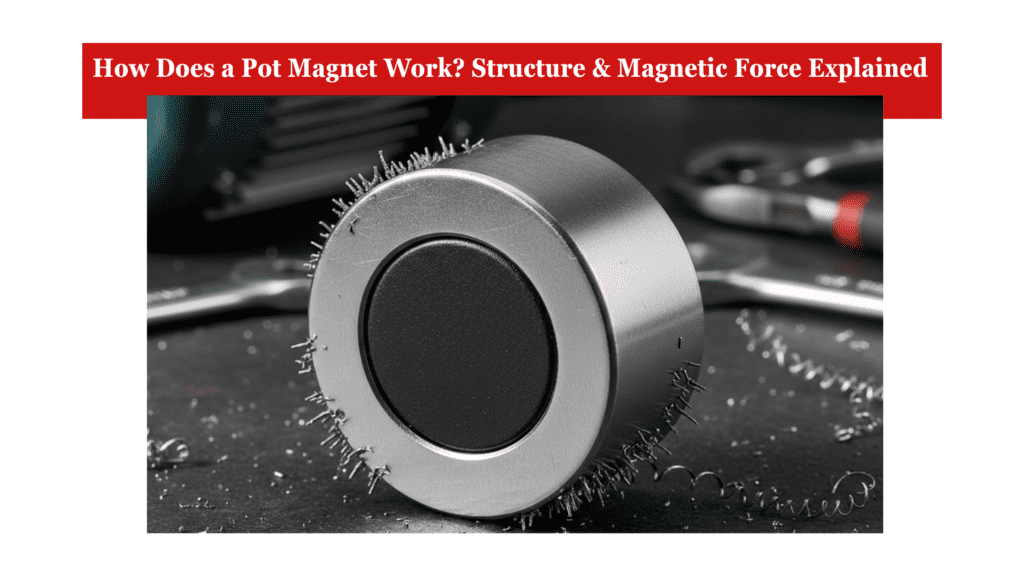
If you’ve ever used a strong magnetic mounting system in an industrial setup, chances are it was a pot magnet.
But how does a pot magnet actually work? Why is it much stronger than a regular magnet of the same size? And how do manufacturers design it for maximum holding force?
In this guide, we’ll break it down in simple terms, from structure to magnetic force, so that you can choose the right solution for your application.
What Is a Pot Magnet?
A pot magnet (also called a cup magnet) is a permanent magnet placed inside a steel casing.
The outer steel shell concentrates and directs the magnetic field to one surface. This increases the holding power significantly compared to a standard magnet.
Most industrial pot magnets use:
- Neodymium magnets (for high strength)
- Ferrite magnets (for cost-effective applications)
- Rubber coating (for surface protection)
Because of this smart design, pot magnets are widely used in:
- Magnetic mounting systems
- Industrial clamping
- Signage installation
- Automotive applications
- Engineering assemblies
The Structure of a Pot Magnet
Understanding the structure helps you understand how it works.
1. The Magnet Core
At the centre is the permanent magnet, usually a neodymium pot magnet for high-strength applications.
Neodymium is preferred because it offers:
- High magnetic strength
- Compact size
- Reliable performance
2. The Steel Pot (Casing)
The magnet sits inside a precision-engineered steel cup.
This casing does three important things:
- Protects the magnet from damage
- Redirects magnetic flux to one surface
- Increases holding force
Without the steel casing, the magnet would lose much of its usable strength.
3. Mounting Options
Pot magnets often come with:
- Internal thread
- External thread
- Countersunk hole
- Hook attachment
These mounting options make them ideal for industrial fastening and removable installations.
How Does a Pot Magnet Work?
Now let’s talk about the science in simple language.
Magnetic Flux Concentration
A regular magnet spreads its magnetic field in all directions.
A pot magnet works differently.
The steel casing acts like a channel. It redirects the magnetic field toward the open face of the magnet. This concentrates the magnetic flux into one powerful contact surface.
The result?
A much stronger holding force when attached to a flat steel surface.
What Determines the Holding Force?
The holding force of a pot magnet depends on several factors:
1. Surface Contact
The magnet must touch a clean, thick steel surface.
Any gap — like paint, rust, or air — reduces the force.
Pro Tip: Even a 0.5 mm air gap can reduce strength by over 50%.
2. Steel Thickness
Thicker steel allows better magnetic flow. Thin metal reduces performance.
3. Magnet Material
- Neodymium = stronger holding force
- Ferrite = lower strength but more affordable
4. Temperature
High temperatures can weaken a permanent magnet.
If your application involves heat, consult your pot magnet manufacturer about temperature grades.
Why Pot Magnets Are Stronger Than Regular Magnets
Here’s the key difference:
A standard magnet wastes magnetic energy by spreading it in all directions.
A pot magnet:
- Concentrates force in one direction
- Reduces magnetic loss
- Protects against chipping or cracking
That’s why a small industrial pot magnet can hold surprisingly heavy loads.
Common Industrial Applications
Because of their compact size and strong grip, pot magnets are used in:
- Magnetic clamping systems
- Machine fixtures
- Display mounting
- Cable holding
- Temporary fastening in construction
In many cases, they replace screws and bolts, saving installation time.
Choosing the Right Pot Magnet Manufacturer
Not all pot magnets are made the same.
An experienced pot magnet manufacturer focuses on:
- Accurate holding force testing
- High-quality steel casing
- Proper magnet grade selection
- Corrosion-resistant coatings
- Custom sizing options
Poor manufacturing can lead to weaker magnets, coating failure, or reduced lifespan.
If you’re sourcing for OEM or industrial use, always ask for:
- Pull force test data
- Material grade specifications
- Coating details (Nickel, Zinc, Epoxy, Rubber)
This ensures long-term reliability.
Practical Tips From Industry Experience
After working with industrial buyers for years, here’s what I’ve seen most often:
- Buyers overestimate pull force based on lab conditions
- Real-world surfaces reduce actual holding power
- Rubber-coated pot magnets protect painted surfaces
- Custom mounting threads reduce installation time
Small technical details make a big difference in performance.
Final Thoughts
A pot magnet works by combining a powerful permanent magnet with a precision steel casing that concentrates magnetic force into one strong contact surface.
This simple yet effective design makes it one of the most reliable magnetic mounting solutions in industrial applications.
Whether you need high-strength neodymium pot magnets or custom-engineered solutions, choosing the right pot magnet manufacturer ensures performance, safety, and long-term durability.
If you’re selecting a magnet for a specific application, always consider:
- Surface type
- Load requirements
- Temperature exposure
- Mounting method
The right choice will save you time, cost, and maintenance in the long run.